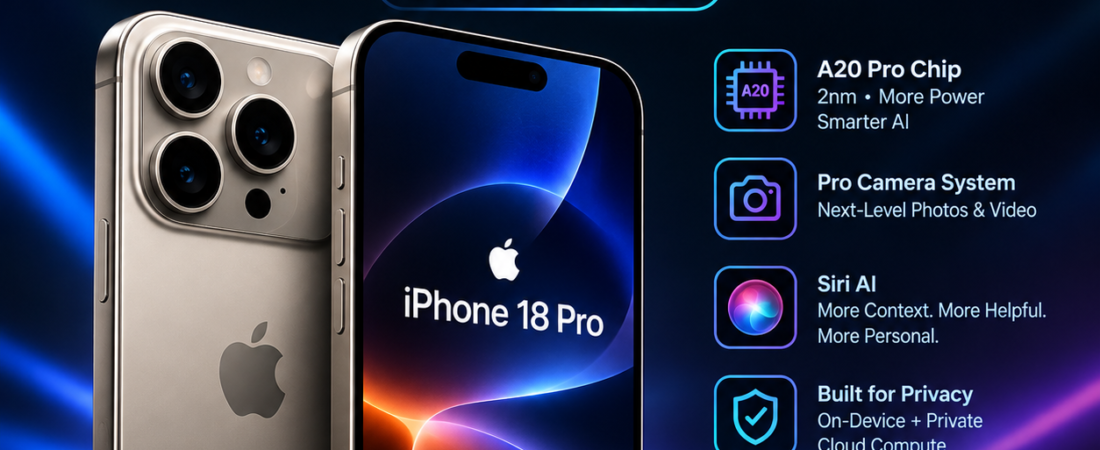
Apple’s approach to artificial intelligence has taken several years to develop, but the iPhone 18 Pro and iPhone 18 Pro Max mark a significant step forward for the company’s mobile AI ambitions.
When Apple introduced Apple Intelligence in 2024, the company positioned AI as a privacy-focused layer across its devices. The strategy combined on-device processing with Apple’s Private Cloud Compute system for more demanding tasks. However, some of the most anticipated Siri capabilities took longer to arrive than originally expected.
With the iPhone 18 Pro generation, Apple is now combining a substantially upgraded processor with its latest software and AI technologies to make on-device intelligence a more central part of the iPhone experience.
Apple’s Early Apple Intelligence Strategy
Apple Intelligence was introduced as a different approach to generative AI. Instead of relying entirely on cloud-based processing, Apple emphasized a combination of on-device AI and Private Cloud Compute.
The company designed its system so that compatible tasks could be handled directly on the device, while more demanding requests could use Apple’s privacy-focused cloud infrastructure. Apple says Private Cloud Compute is designed so that user data is not stored and is used only to process requests.
The original rollout, however, did not immediately deliver every AI feature Apple had demonstrated or discussed. More advanced Siri capabilities, including greater contextual understanding and deeper interaction with apps, arrived later.
That gradual rollout gave competitors additional time to expand their own smartphone AI platforms.
iPhone 18 Pro Puts More Power Behind AI
The biggest hardware change in the iPhone 18 Pro is Apple’s A20 Pro chip.
Apple says the processor is manufactured using a 2-nanometer process and includes a six-core CPU, seven-core GPU and a new dual 16-core Neural Engine. The company also says the chip provides 50% more memory bandwidth than the previous A19 Pro and up to 40% faster GPU performance.
The A20 Pro is particularly important for AI workloads because Apple has added dedicated neural accelerators and expanded the Neural Engine architecture.
That additional processing capability gives the iPhone more room to handle demanding AI operations locally while also supporting Apple’s broader performance and efficiency goals.
Siri AI Finally Gets More Context
Software is just as important as the new silicon.
Apple’s latest generation of Apple Intelligence introduces Siri AI, which Apple describes as a more capable and conversational assistant. It can understand personal context, use broader knowledge, recognize what’s happening on the screen and perform more system-level actions.
This represents a major change from the more traditional Siri experience.
Instead of simply responding to isolated voice commands, the newer Siri is designed to understand more about what the user is doing and provide assistance based on that context.
Apple has also integrated the latest Apple Intelligence features more deeply into its operating systems, with capabilities extending across apps and everyday workflows.
Privacy Remains Central to Apple’s AI Push
Apple is still building its AI strategy around privacy.
The company says Apple Intelligence can process information on the device without collecting personal information, while Private Cloud Compute handles requests requiring larger server-based models. Apple also states that data processed through Private Cloud Compute is not stored.
That approach remains one of the defining differences in how Apple presents its AI platform.
The iPhone 18 Pro therefore isn’t simply about adding more generative AI features. Apple’s strategy is to integrate intelligence into the operating system while keeping personal data protection at the center of the experience.
A20 Pro Also Improves Sustained Performance
AI workloads can place considerable pressure on smartphone processors, particularly when tasks are performed continuously.
Apple has addressed this with a redesigned thermal system in the iPhone 18 Pro models. The A20 Pro package works with a next-generation vapor chamber designed to improve sustained performance.
Apple says the new cooling system has three times the surface area of the previous generation and enables up to a 40% improvement in sustained performance compared with the previous iPhone Pro generation.
This matters because powerful AI features are only useful if a phone can maintain performance without excessive heat or rapid battery drain.
Is the iPhone 18 Pro Apple’s AI Turning Point?
The iPhone 18 Pro does not represent Apple’s first attempt at smartphone AI. Apple Intelligence has already been available across supported devices, including several earlier iPhone models.
What has changed is the combination of more powerful AI-focused hardware, deeper system integration and the arrival of a more capable Siri AI.
Apple’s latest hardware and software releases suggest that AI is becoming a much more fundamental part of the iPhone experience rather than an additional collection of features.
Whether Apple’s approach will ultimately change the competitive balance in smartphone AI will depend on how quickly these capabilities expand and how useful they become in everyday tasks. For now, the iPhone 18 Pro gives Apple a significantly stronger hardware and software foundation for its next phase of mobile AI.
SEO Keywords
Primary keyword: iPhone 18 Pro AI
Secondary keywords: iPhone 18 Pro, Apple Intelligence, Siri AI, A20 Pro, iPhone 18 Pro Max, Apple AI, iPhone AI features, A20 Pro 2nm chip, on-device AI, Apple Intelligence 2026, iPhone 18 Pro AI features, Apple Siri AI
Meta Description
The iPhone 18 Pro brings Apple’s AI strategy to a new level with the A20 Pro chip, Siri AI, on-device processing and deeper Apple Intelligence integration.
Suggested URL Slug
iphone-18-pro-ai-apple-intelligence-a20-pro-siri-ai
iPhone 18 Pro Brings Apple’s AI Strategy Into a New Era
Apple’s approach to artificial intelligence has taken several years to develop, but the iPhone 18 Pro and iPhone 18 Pro Max mark a significant step forward for the company’s mobile AI ambitions.
When Apple introduced Apple Intelligence in 2024, the company positioned AI as a privacy-focused layer across its devices. The strategy combined on-device processing with Apple’s Private Cloud Compute system for more demanding tasks. However, some of the most anticipated Siri capabilities took longer to arrive than originally expected.
With the iPhone 18 Pro generation, Apple is now combining a substantially upgraded processor with its latest software and AI technologies to make on-device intelligence a more central part of the iPhone experience.
Apple’s Early Apple Intelligence Strategy
Apple Intelligence was introduced as a different approach to generative AI. Instead of relying entirely on cloud-based processing, Apple emphasized a combination of on-device AI and Private Cloud Compute.
The company designed its system so that compatible tasks could be handled directly on the device, while more demanding requests could use Apple’s privacy-focused cloud infrastructure. Apple says Private Cloud Compute is designed so that user data is not stored and is used only to process requests.
The original rollout, however, did not immediately deliver every AI feature Apple had demonstrated or discussed. More advanced Siri capabilities, including greater contextual understanding and deeper interaction with apps, arrived later.
That gradual rollout gave competitors additional time to expand their own smartphone AI platforms.
iPhone 18 Pro Puts More Power Behind AI
The biggest hardware change in the iPhone 18 Pro is Apple’s A20 Pro chip.
Apple says the processor is manufactured using a 2-nanometer process and includes a six-core CPU, seven-core GPU and a new dual 16-core Neural Engine. The company also says the chip provides 50% more memory bandwidth than the previous A19 Pro and up to 40% faster GPU performance.
The A20 Pro is particularly important for AI workloads because Apple has added dedicated neural accelerators and expanded the Neural Engine architecture.
That additional processing capability gives the iPhone more room to handle demanding AI operations locally while also supporting Apple’s broader performance and efficiency goals.
Siri AI Finally Gets More Context
Software is just as important as the new silicon.
Apple’s latest generation of Apple Intelligence introduces Siri AI, which Apple describes as a more capable and conversational assistant. It can understand personal context, use broader knowledge, recognize what’s happening on the screen and perform more system-level actions.
This represents a major change from the more traditional Siri experience.
Instead of simply responding to isolated voice commands, the newer Siri is designed to understand more about what the user is doing and provide assistance based on that context.
Apple has also integrated the latest Apple Intelligence features more deeply into its operating systems, with capabilities extending across apps and everyday workflows.
Privacy Remains Central to Apple’s AI Push
Apple is still building its AI strategy around privacy.
The company says Apple Intelligence can process information on the device without collecting personal information, while Private Cloud Compute handles requests requiring larger server-based models. Apple also states that data processed through Private Cloud Compute is not stored.
That approach remains one of the defining differences in how Apple presents its AI platform.
The iPhone 18 Pro therefore isn’t simply about adding more generative AI features. Apple’s strategy is to integrate intelligence into the operating system while keeping personal data protection at the center of the experience.
A20 Pro Also Improves Sustained Performance
AI workloads can place considerable pressure on smartphone processors, particularly when tasks are performed continuously.
Apple has addressed this with a redesigned thermal system in the iPhone 18 Pro models. The A20 Pro package works with a next-generation vapor chamber designed to improve sustained performance.
Apple says the new cooling system has three times the surface area of the previous generation and enables up to a 40% improvement in sustained performance compared with the previous iPhone Pro generation.
This matters because powerful AI features are only useful if a phone can maintain performance without excessive heat or rapid battery drain.
Is the iPhone 18 Pro Apple’s AI Turning Point?
The iPhone 18 Pro does not represent Apple’s first attempt at smartphone AI. Apple Intelligence has already been available across supported devices, including several earlier iPhone models.
What has changed is the combination of more powerful AI-focused hardware, deeper system integration and the arrival of a more capable Siri AI.
Apple’s latest hardware and software releases suggest that AI is becoming a much more fundamental part of the iPhone experience rather than an additional collection of features.
Whether Apple’s approach will ultimately change the competitive balance in smartphone AI will depend on how quickly these capabilities expand and how useful they become in everyday tasks. For now, the iPhone 18 Pro gives Apple a significantly stronger hardware and software foundation for its next phase of mobile AI.
SEO Keywords
Primary keyword: iPhone 18 Pro AI
Secondary keywords: iPhone 18 Pro, Apple Intelligence, Siri AI, A20 Pro, iPhone 18 Pro Max, Apple AI, iPhone AI features, A20 Pro 2nm chip, on-device AI, Apple Intelligence 2026, iPhone 18 Pro AI features, Apple Siri AI
Meta Description
The iPhone 18 Pro brings Apple’s AI strategy to a new level with the A20 Pro chip, Siri AI, on-device processing and deeper Apple Intelligence integration.
Suggested URL Slug
iphone-18-pro-ai-apple-intelligence-a20-pro-siri-ai
iPhone 18 Pro Brings Apple’s AI Strategy Into a New Era
Apple’s approach to artificial intelligence has taken several years to develop, but the iPhone 18 Pro and iPhone 18 Pro Max mark a significant step forward for the company’s mobile AI ambitions.
When Apple introduced Apple Intelligence in 2024, the company positioned AI as a privacy-focused layer across its devices. The strategy combined on-device processing with Apple’s Private Cloud Compute system for more demanding tasks. However, some of the most anticipated Siri capabilities took longer to arrive than originally expected.
With the iPhone 18 Pro generation, Apple is now combining a substantially upgraded processor with its latest software and AI technologies to make on-device intelligence a more central part of the iPhone experience.
Apple’s Early Apple Intelligence Strategy
Apple Intelligence was introduced as a different approach to generative AI. Instead of relying entirely on cloud-based processing, Apple emphasized a combination of on-device AI and Private Cloud Compute.
The company designed its system so that compatible tasks could be handled directly on the device, while more demanding requests could use Apple’s privacy-focused cloud infrastructure. Apple says Private Cloud Compute is designed so that user data is not stored and is used only to process requests.
The original rollout, however, did not immediately deliver every AI feature Apple had demonstrated or discussed. More advanced Siri capabilities, including greater contextual understanding and deeper interaction with apps, arrived later.
That gradual rollout gave competitors additional time to expand their own smartphone AI platforms.
iPhone 18 Pro Puts More Power Behind AI
The biggest hardware change in the iPhone 18 Pro is Apple’s A20 Pro chip.
Apple says the processor is manufactured using a 2-nanometer process and includes a six-core CPU, seven-core GPU and a new dual 16-core Neural Engine. The company also says the chip provides 50% more memory bandwidth than the previous A19 Pro and up to 40% faster GPU performance.
The A20 Pro is particularly important for AI workloads because Apple has added dedicated neural accelerators and expanded the Neural Engine architecture.
That additional processing capability gives the iPhone more room to handle demanding AI operations locally while also supporting Apple’s broader performance and efficiency goals.
Siri AI Finally Gets More Context
Software is just as important as the new silicon.
Apple’s latest generation of Apple Intelligence introduces Siri AI, which Apple describes as a more capable and conversational assistant. It can understand personal context, use broader knowledge, recognize what’s happening on the screen and perform more system-level actions.
This represents a major change from the more traditional Siri experience.
Instead of simply responding to isolated voice commands, the newer Siri is designed to understand more about what the user is doing and provide assistance based on that context.
Apple has also integrated the latest Apple Intelligence features more deeply into its operating systems, with capabilities extending across apps and everyday workflows.
Privacy Remains Central to Apple’s AI Push
Apple is still building its AI strategy around privacy.
The company says Apple Intelligence can process information on the device without collecting personal information, while Private Cloud Compute handles requests requiring larger server-based models. Apple also states that data processed through Private Cloud Compute is not stored.
That approach remains one of the defining differences in how Apple presents its AI platform.
The iPhone 18 Pro therefore isn’t simply about adding more generative AI features. Apple’s strategy is to integrate intelligence into the operating system while keeping personal data protection at the center of the experience.
A20 Pro Also Improves Sustained Performance
AI workloads can place considerable pressure on smartphone processors, particularly when tasks are performed continuously.
Apple has addressed this with a redesigned thermal system in the iPhone 18 Pro models. The A20 Pro package works with a next-generation vapor chamber designed to improve sustained performance.
Apple says the new cooling system has three times the surface area of the previous generation and enables up to a 40% improvement in sustained performance compared with the previous iPhone Pro generation.
This matters because powerful AI features are only useful if a phone can maintain performance without excessive heat or rapid battery drain.
Is the iPhone 18 Pro Apple’s AI Turning Point?
The iPhone 18 Pro does not represent Apple’s first attempt at smartphone AI. Apple Intelligence has already been available across supported devices, including several earlier iPhone models.
What has changed is the combination of more powerful AI-focused hardware, deeper system integration and the arrival of a more capable Siri AI.
Apple’s latest hardware and software releases suggest that AI is becoming a much more fundamental part of the iPhone experience rather than an additional collection of features.
Whether Apple’s approach will ultimately change the competitive balance in smartphone AI will depend on how quickly these capabilities expand and how useful they become in everyday tasks. For now, the iPhone 18 Pro gives Apple a significantly stronger hardware and software foundation for its next phase of mobile AI.
SEO Keywords
Primary keyword: iPhone 18 Pro AI
Secondary keywords: iPhone 18 Pro, Apple Intelligence, Siri AI, A20 Pro, iPhone 18 Pro Max, Apple AI, iPhone AI features, A20 Pro 2nm chip, on-device AI, Apple Intelligence 2026, iPhone 18 Pro AI features, Apple Siri AI
Meta Description
The iPhone 18 Pro brings Apple’s AI strategy to a new level with the A20 Pro chip, Siri AI, on-device processing and deeper Apple Intelligence integration.
Suggested URL Slug
iphone-18-pro-ai-apple-intelligence-a20-pro-siri-ai
Apple’s approach to artificial intelligence has taken several years to develop, but the iPhone 18 Pro and iPhone 18 Pro Max mark a significant step forward for the company’s mobile AI ambitions.
When Apple introduced Apple Intelligence in 2024, the company positioned AI as a privacy-focused layer across its devices. The strategy combined on-device processing with Apple’s Private Cloud Compute system for more demanding tasks. However, some of the most anticipated Siri capabilities took longer to arrive than originally expected.
With the iPhone 18 Pro generation, Apple is now combining a substantially upgraded processor with its latest software and AI technologies to make on-device intelligence a more central part of the iPhone experience.
Apple’s Early Apple Intelligence Strategy
Apple Intelligence was introduced as a different approach to generative AI. Instead of relying entirely on cloud-based processing, Apple emphasized a combination of on-device AI and Private Cloud Compute.
The company designed its system so that compatible tasks could be handled directly on the device, while more demanding requests could use Apple’s privacy-focused cloud infrastructure. Apple says Private Cloud Compute is designed so that user data is not stored and is used only to process requests.
The original rollout, however, did not immediately deliver every AI feature Apple had demonstrated or discussed. More advanced Siri capabilities, including greater contextual understanding and deeper interaction with apps, arrived later.
That gradual rollout gave competitors additional time to expand their own smartphone AI platforms.
iPhone 18 Pro Puts More Power Behind AI
The biggest hardware change in the iPhone 18 Pro is Apple’s A20 Pro chip.
Apple says the processor is manufactured using a 2-nanometer process and includes a six-core CPU, seven-core GPU and a new dual 16-core Neural Engine. The company also says the chip provides 50% more memory bandwidth than the previous A19 Pro and up to 40% faster GPU performance.
The A20 Pro is particularly important for AI workloads because Apple has added dedicated neural accelerators and expanded the Neural Engine architecture.
That additional processing capability gives the iPhone more room to handle demanding AI operations locally while also supporting Apple’s broader performance and efficiency goals.
Siri AI Finally Gets More Context
Software is just as important as the new silicon.
Apple’s latest generation of Apple Intelligence introduces Siri AI, which Apple describes as a more capable and conversational assistant. It can understand personal context, use broader knowledge, recognize what’s happening on the screen and perform more system-level actions.
This represents a major change from the more traditional Siri experience.
Instead of simply responding to isolated voice commands, the newer Siri is designed to understand more about what the user is doing and provide assistance based on that context.
Apple has also integrated the latest Apple Intelligence features more deeply into its operating systems, with capabilities extending across apps and everyday workflows.
Privacy Remains Central to Apple’s AI Push
Apple is still building its AI strategy around privacy.
The company says Apple Intelligence can process information on the device without collecting personal information, while Private Cloud Compute handles requests requiring larger server-based models. Apple also states that data processed through Private Cloud Compute is not stored.
That approach remains one of the defining differences in how Apple presents its AI platform.
The iPhone 18 Pro therefore isn’t simply about adding more generative AI features. Apple’s strategy is to integrate intelligence into the operating system while keeping personal data protection at the center of the experience.
A20 Pro Also Improves Sustained Performance
AI workloads can place considerable pressure on smartphone processors, particularly when tasks are performed continuously.
Apple has addressed this with a redesigned thermal system in the iPhone 18 Pro models. The A20 Pro package works with a next-generation vapor chamber designed to improve sustained performance.
Apple says the new cooling system has three times the surface area of the previous generation and enables up to a 40% improvement in sustained performance compared with the previous iPhone Pro generation.
This matters because powerful AI features are only useful if a phone can maintain performance without excessive heat or rapid battery drain.
Is the iPhone 18 Pro Apple’s AI Turning Point?
The iPhone 18 Pro does not represent Apple’s first attempt at smartphone AI. Apple Intelligence has already been available across supported devices, including several earlier iPhone models.
What has changed is the combination of more powerful AI-focused hardware, deeper system integration and the arrival of a more capable Siri AI.
Apple’s latest hardware and software releases suggest that AI is becoming a much more fundamental part of the iPhone experience rather than an additional collection of features.
Whether Apple’s approach will ultimately change the competitive balance in smartphone AI will depend on how quickly these capabilities expand and how useful they become in everyday tasks. For now, the iPhone 18 Pro gives Apple a significantly stronger hardware and software foundation for its next phase of mobile AI.